Zero Trust in Healthcare: Leveraging Android 16's 'Identity Check' for Shared Clinical Devices
For over a decade, healthcare IT executives have been trapped in a zero-sum game: implement rigorous security and frustrate clinicians, or prioritize clinical speed and invite devastating data breaches. We believe this false dichotomy ends now.
For over a decade, healthcare IT executives have been trapped in a zero-sum game: implement rigorous security and frustrate clinicians, or prioritize clinical speed and invite devastating data breaches. We believe this false dichotomy ends now.
At Nomid, we see the healthcare mobility landscape standing on the precipice of a massive paradigm shift. The catalyst isn't a new medical device; it is the strategic enterprise application of a feature initially designed for consumer anti-theft: Android 16 Identity Check.
Historically, balancing life-saving operational speed with strict HIPAA compliance on shared clinical devices has been the Achilles' heel of hospital IT. Nurses and physicians share shift devices to access electronic health records (EHR), administer medication, and coordinate patient care. But generic logins violate non-repudiation principles, and constant, repetitive PIN entries cause severe friction during critical care moments.
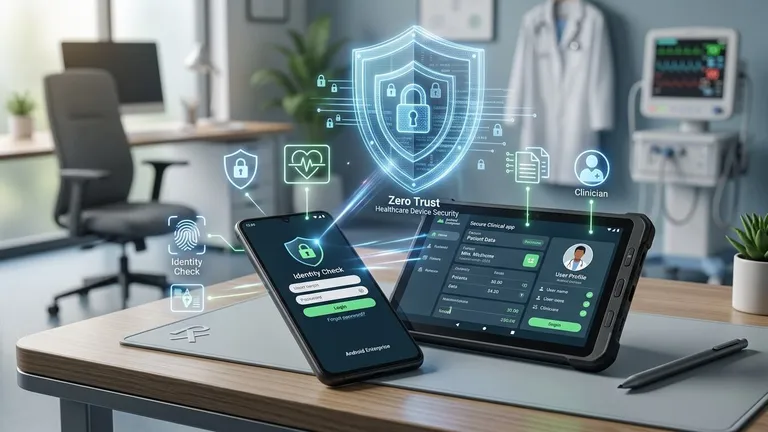
We predict that by 2027, traditional PIN-based access on clinical devices will be viewed not just as an operational bottleneck, but as a critical, auditable liability. Zero Trust in healthcare requires verifying the user at the point of action, not just the point of device unlock. By leveraging Android 16's Identity Check through advanced Android Enterprise MDM orchestration, Nomid MDM is empowering healthcare organizations to enforce granular, app-level biometric authentication.
"In healthcare, a delayed login isn't just an IT nuisance; it's a barrier to patient care. Security that impedes care delivery is simply a different kind of clinical risk."
The Clinical Reality: When Seconds Count, Legacy Security Fails
To understand the revolutionary impact of Android 16 Identity Check, we must first confront the operational realities of the modern hospital floor. Shared clinical devices are the lifeblood of contemporary care delivery. A single ruggedized tablet or clinical smartphone might pass through the hands of a triage nurse, an attending physician, and a respiratory therapist within a single twelve-hour shift.
Currently, healthcare IT attempts to secure these shared fleets using one of two flawed methodologies:
- The High-Friction Approach: Every time the device screen times out--which happens frequently to preserve battery and privacy--the clinician must enter a complex alphanumeric password or a long PIN. When a nurse is responding to a code blue, fumbling with a complex password on a glass screen is unacceptable.
- The High-Risk Approach: To avoid clinical complaints, IT extends screen timeout windows and utilizes generic "shift" credentials. This completely obliterates the foundation of HIPAA compliance on mobile devices, making it impossible to confidently audit who accessed a specific patient record or authorized a controlled substance.
At Nomid, we firmly believe that asking clinicians to choose between patient safety and data security is a failure of technology, not a failure of policy. Zero Trust Healthcare demands that we verify the identity of the operator continuously and seamlessly. Until now, the operating system tools to achieve this on shared devices have been clunky, requiring third-party identity providers to hijack the user interface, leading to battery drain and software conflicts.
Repositioning Android 16: The Enterprise Rebirth of 'Identity Check'
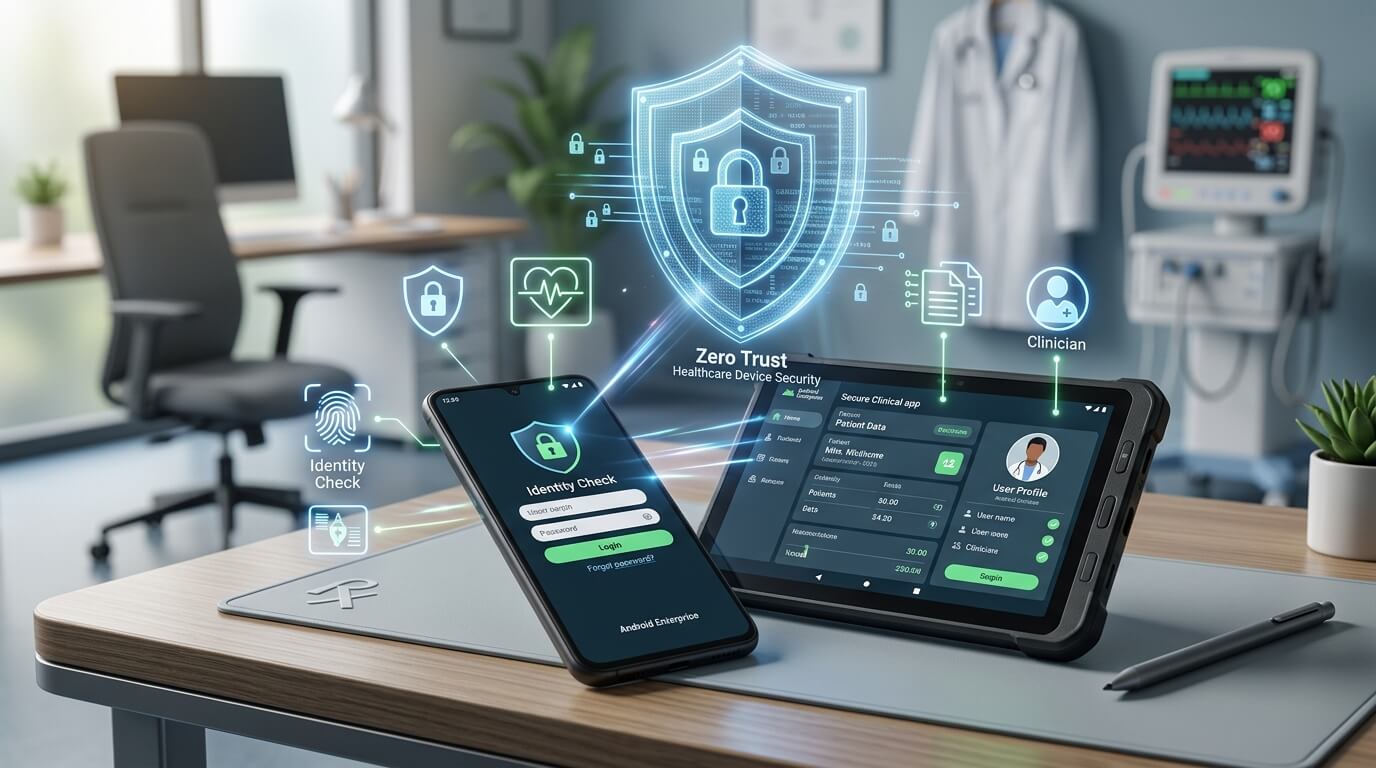
When Google announced "Identity Check" for Android 16, the tech press focused entirely on its consumer applications--specifically, preventing thieves who have stolen a device and observed the PIN from accessing banking apps or changing Google account settings. The feature forces a biometric authentication (fingerprint or facial recognition) for sensitive actions, explicitly disabling the PIN fallback option if the device is outside a "trusted location."
While consumer tech pundits praised the anti-theft implications, our engineering and strategy teams at Nomid recognized something far more profound. We see Android 16's Identity Check as the ultimate enterprise Zero Trust enabler for healthcare.
We believe that repositioning this feature from a consumer protection tool to an enterprise compliance mechanism will define the next era of EHR mobile security. Instead of relying on a PIN that can be easily shared among nursing staff (a rampant, albeit well-intentioned, HIPAA violation), Identity Check forces a biometric verification tied to the specific clinician's session.
Biometric Step-Up Authentication: Granular Security at the App Level
The true power of integrating Android 16 Identity Check into a shared clinical environment lies in biometric step-up authentication. Zero Trust doesn't mean zero speed; it means contextual, proportional security.
Consider the daily workflow of a critical care nurse. They use a shared clinical device for a variety of tasks, each carrying a different risk profile. Checking the cafeteria menu or viewing the general ward schedule carries minimal risk. However, accessing the Epic Rover or Cerner CareAwake app to administer a Schedule II narcotic carries immense clinical and regulatory risk.
With Nomid MDM orchestrating Android 16's capabilities, healthcare IT can configure granular, app-level security policies:
- Tier 1 (Low Risk): The device is unlocked via a standard shift PIN or badge tap. The clinician can access secure messaging, paging, and hospital intranet resources without friction.
- Tier 2 (Medium Risk): The clinician opens the EHR application to view patient vitals. Nomid MDM triggers a standard biometric prompt.
- Tier 3 (High Risk): The clinician attempts to modify a patient's chart, prescribe medication, or access highly sensitive psychiatric records. Here, Nomid MDM enforces the Android 16 Identity Check protocol. The system demands an immediate, mandatory biometric authentication, entirely disabling the PIN fallback. If the biometric scan fails or does not match the authenticated session user, access is instantly denied.
"By enforcing mandatory biometric step-up authentication for high-risk clinical actions, we are effectively eliminating the 'shared PIN' vulnerability that has plagued hospital compliance audits for years."
This contextual approach ensures that security friction is only introduced exactly when it is warranted. The clinician experiences lightning-fast access for 90% of their shift, while the hospital's CISO gains ironclad, non-repudiable audit trails for the 10% of actions that carry regulatory weight.

Orchestrating the Shift: The Nomid MDM Healthcare Advantage
Having a powerful feature baked into the Android operating system is only half the battle. The critical challenge for enterprise healthcare IT is deployment, orchestration, and lifecycle management at scale. You cannot manually configure Identity Check on 5,000 hospital smartphones.
As an official Android Enterprise Partner, Nomid MDM is uniquely positioned to bridge the gap between Android 16's native capabilities and the complex realities of healthcare operations. We don't just manage devices; we engineer clinical workflows.
Lightning Fast Device Deployment via Zero-Touch Enrollment
When a hospital expands a wing or refreshes its hardware fleet, speed is of the essence. At Nomid, we leverage Android Zero-Touch Enrollment to provision shared clinical devices straight out of the box. The moment a device connects to the hospital's Wi-Fi, Nomid MDM takes control, stripping away consumer bloatware, locking down the UI into a dedicated clinical kiosk mode, and silently pushing EHR applications.
Crucially, during this Zero-Touch provisioning, Nomid MDM automatically configures the Identity Check policies. IT administrators do not need to rely on end-users to set up their security settings. The device arrives on the clinical floor pre-hardened, fully compliant, and ready to enforce Zero Trust principles from minute one.
Deep Samsung Knox Integration
We recognize that a significant portion of healthcare mobility relies on ruggedized Samsung devices. Nomid MDM's deep integration with Samsung Knox elevates Android 16's Identity Check to military-grade security levels. By tying the biometric authentication requirements directly into the Knox hardware-backed Keystore, we ensure that biometric data is never exposed, never leaves the device, and cannot be spoofed by malicious software.
Furthermore, Nomid utilizes Knox Service Plugin (KSP) to enforce granular device restrictions--disabling cameras in sensitive wards, geo-fencing devices to specific hospital floors, and ensuring that if a device leaves the trusted network, it instantly initiates a corporate wipe.
Shared Device Provisioning and Shift Transitions
The operational magic of Nomid MDM healthcare solutions shines brightest during shift changes. When Nurse A finishes their shift, they tap a "Sign Out" button on the Nomid managed home screen. The MDM instantly clears app caches, revokes session tokens, and sanitizes the environment.
When Nurse B picks up the same device, they tap their NFC badge or enter their unique credentials. Nomid MDM instantly provisions their specific user profile, tying their unique biometric signature to the Android 16 Identity Check framework for the duration of their shift. This ensures that the biometric step-up authentication is always validating the *current* shift worker, not the previous one.
Redefining HIPAA Compliance on Mobile Devices
From a compliance perspective, the integration of Android 16 Identity Check via Nomid MDM is a watershed moment. The Health Insurance Portability and Accountability Act (HIPAA) Security Rule requires covered entities to implement technical policies and procedures for electronic information systems that maintain electronic protected health information (ePHI) to allow access only to those persons or software programs that have been granted access rights.
Historically, auditors have viewed shared mobile devices with extreme skepticism. How can a hospital prove that Nurse John Doe accessed the record, and not Nurse Jane Smith who borrowed his unlocked tablet?
We believe that Nomid MDM's implementation of Identity Check provides the definitive answer to this regulatory challenge. By forcing a PIN-less biometric verification for EHR access, we provide cryptographic proof of identity at the exact moment of data access.
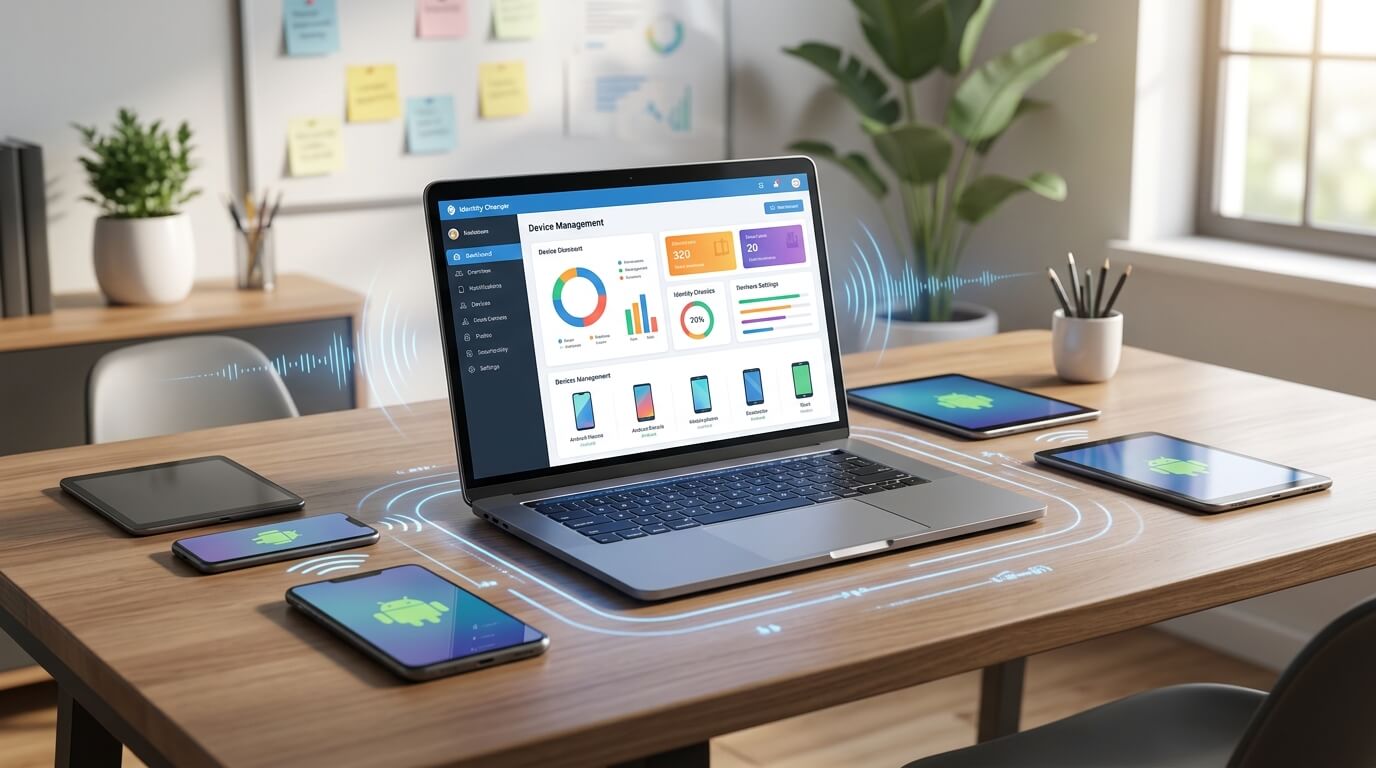
The Nomid MDM dashboard provides compliance officers with real-time, exportable audit logs detailing:
- Which clinician checked out the shared device.
- The exact timestamp of biometric step-up authentication events.
- Failed biometric attempts, triggering automatic alerts for potential unauthorized access.
- Device location and network status during the authentication event.
The Forward-Looking Imperative: Healthcare IT in 2027
At Nomid, we do not merely react to operating system updates; we forecast their long-term impact on industry verticals. As we look toward 2027, we predict a fundamental restructuring of healthcare mobility.
First, we anticipate that cyber liability insurance providers will begin mandating biometric step-up authentication for all mobile EHR access. The financial cost of healthcare data breaches--currently averaging nearly $11 million per incident according to IBM--is unsustainable. Insurers will look at tools like Android 16 Identity Check not as optional upgrades, but as baseline underwriting requirements.
Second, the concept of the "shared PIN" will be eradicated. Just as the medical community phased out paper charts in favor of digital records, hospital IT will phase out password-based authentication on shared devices in favor of seamless, continuous biometric validation.
Finally, the role of the MDM will shift from simple device management to complex identity orchestration. Healthcare organizations will require platforms like Nomid MDM that can seamlessly weave together Zero-Touch Enrollment, Knox hardware security, and advanced OS features like Identity Check into a single, frictionless clinical experience.
"The future of healthcare IT belongs to those who understand that security and clinical speed are not opposing forces. With the right orchestration, they are deeply complementary."
Conclusion: Empowering the Frontlines of Care
The introduction of Android 16's Identity Check is a pivotal moment for enterprise mobility, but its true potential in healthcare can only be unlocked through intelligent, industry-specific orchestration.
At Nomid, we believe that healthcare professionals deserve technology that works as tirelessly as they do. They deserve shared clinical devices that grant instant access when seconds matter, without compromising the sacred trust of patient data privacy. By leveraging Nomid MDM to enforce granular, biometric step-up authentication, hospitals can finally achieve true Zero Trust Healthcare.
We invite healthcare CIOs, CISOs, and IT Directors to stop compromising. The tools to secure your shared clinical fleets without frustrating your clinicians are here today. Partner with Nomid MDM, an official Android Enterprise Partner, and let us help you transform Android 16's Identity Check into your organization's most powerful clinical security asset. The future of healthcare mobility is fast, it is secure, and it is biometric.
Purpose-built for your industry
See how Nomid MDM delivers tailored device management for your specific industry needs.
Start for FreeWritten by
David Ponces
Tags
Related Articles
View all posts industry
 5 Strategies to Extend the Lifespan of Rugged Android Devices in Manufacturing
The modern manufacturing floor is an unforgiving environment. Between extreme temperatures, airborne metallic dust, high-impact concrete drops, and continuous multi-shift usage, enterprise mobile devices take an absolute beating. Historically, IT departments relied on a standard three-year hardwa...
 industry
 Shadow AI 2.0: How to Use MDM to Control Local AI Models on Enterprise Devices
We are officially entering the era of Bring Your Own Model (BYOM), and it is rendering traditional network security architectures obsolete. For the past two years, Chief Information Security Officers (CISOs) have been battling "Shadow AI 1.0"—employees pasting proprietary source code or sensitive...