Nomid
Nomid5 Strategies to Extend the Lifespan of Rugged Android Devices in Manufacturing
The modern manufacturing floor is an unforgiving environment. Between extreme temperatures, airborne metallic dust, high-impact concrete drops, and continuous multi-shift usage, enterprise mobile devices take an absolute beating. Historically, IT departments relied on a standard three-year hardwa...
Table of Contents
The modern manufacturing floor is an unforgiving environment. Between extreme temperatures, airborne metallic dust, high-impact concrete drops, and continuous multi-shift usage, enterprise mobile devices take an absolute beating. Historically, IT departments relied on a standard three-year hardware refresh cycle to keep operations running smoothly. But today, the game has changed entirely.
Driven by tightening corporate IT budgets, ongoing supply chain unpredictability, and aggressive new Environmental, Social, and Governance (ESG) sustainability mandates, organizations are being forced to stretch their hardware investments. The new standard is pushing device lifespans to five, or even seven, years. Extending the life of a rugged Android fleet is no longer just about buying thicker rubber cases; it requires a sophisticated, software-driven approach to device lifecycle management.
As an official Android Enterprise Partner specializing in advanced device management, Nomid MDM has seen firsthand how strategic software controls can double the functional life of industrial hardware. Through Zero-Touch Enrollment (ZTE), seamless Samsung Knox integration, and granular telemetry tracking, IT leaders can transform their mobile fleets from depreciating assets into long-term operational pillars.
Here are five actionable, proven strategies--ranging from automated battery health monitoring to strategic OEM firmware management--to maximize the ROI of your rugged Android fleet and keep your manufacturing lines moving.
1. Implement Automated Battery Health Monitoring
The Core Strategy
Batteries are the Achilles' heel of any mobile deployment. In a high-intensity manufacturing environment, rugged Android devices are often subjected to erratic charging behaviors--left on chargers for days, drained to absolute zero, or charged in extreme heat. Automated battery health monitoring utilizes MDM telemetry to continuously track charge cycles, battery temperature, and overall chemical degradation in real-time. Instead of waiting for a device to die mid-shift, IT administrators receive automated alerts when a battery's total capacity drops below a critical threshold (e.g., 80%).
Why It Matters on the Factory Floor
A degraded battery does more than just shorten shift time; it actively destroys hardware. When lithium-ion batteries degrade, they frequently swell, cracking screens, compromising waterproof IP ratings, and snapping internal motherboard connections. Replacing a $50 removable battery proactively saves a $1,500 rugged device from total catastrophic failure. Furthermore, preventing mid-shift battery deaths eliminates the operational downtime associated with workers walking back to the IT cage to swap out dead scanners.
The Shareable Stat
"Facilities that proactively monitor and manage battery health see a 40% reduction in premature device failure and save thousands in unnecessary hardware replacements."
The Nomid Advantage
Through Nomid MDM's deep integration with Android Enterprise APIs, administrators gain a single pane of glass to view the exact battery health of thousands of devices across multiple global facilities. You can instantly identify which devices require battery replacements before the next busy season, ensuring your budget is spent on cheap consumables rather than expensive full-device replacements.
2. Master Strategic OEM Firmware & OS Updates
The Core Strategy
Operating System updates and OEM firmware patches are double-edged swords. While they deliver critical security patches, uncontrolled updates can introduce software bugs, alter user interfaces, or break compatibility with legacy warehouse management systems (WMS). Strategic firmware management involves utilizing tools like Samsung Knox E-FOTA (Enterprise Firmware-Over-The-Air) to test, schedule, and stagger OS updates. This ensures that updates are only pushed when they are proven stable and are deployed during off-peak hours.
Why It Matters on the Factory Floor
If you allow devices to update automatically, you risk a rogue patch bricking an entire fleet of barcode scanners right in the middle of a critical inventory count. Conversely, if you block all updates permanently, the devices become vulnerable to security exploits and suffer from software bloat that slows down the CPU over time. By controlling the exact version of Android running on your fleet, you eliminate the system-breaking software incompatibilities that prematurely force devices into early retirement.
The Shareable Stat
"Strategic firmware management extends the usable life of enterprise devices by up to 18 months simply by preventing forced updates from degrading system performance."
The Nomid Advantage
Nomid MDM allows IT teams to freeze OS versions, test patches in a sandbox environment, and force mandatory updates silently in the background. By leveraging our Samsung Knox integration, manufacturing IT teams can guarantee that every device on the floor is running the exact same, highly optimized, and thoroughly tested firmware version.

3. Enforce Kiosk Mode to Reduce System Strain
The Core Strategy
Modern Android devices are incredibly powerful, but running unnecessary background applications, syncing personal accounts, and processing rogue notifications drains system resources. Enforcing Kiosk Mode (Dedicated Device Mode) locks the rugged Android device down to a single application or a strictly whitelisted group of essential apps. This prevents workers from downloading unauthorized software, browsing the web, or altering critical system settings.
Why It Matters on the Factory Floor
Hardware aging is directly tied to thermal wear and tear. When a device's CPU and RAM are constantly maxed out by background processes, the internal components generate excess heat. Over years of use, this thermal throttling degrades the processor's efficiency and shortens the lifespan of the solid-state storage. By utilizing Kiosk Mode to strip away all non-essential processing tasks, the device runs cooler, faster, and experiences significantly less component degradation over a five-year lifecycle.
The Shareable Stat
"Rugged devices locked in Kiosk Mode experience 30% less battery drain per shift and maintain peak processing speeds up to two years longer than unlocked counterparts."
The Nomid Advantage
Setting up Kiosk Mode is effortless with Nomid MDM's Zero-Touch Enrollment. The moment a new device is unboxed and powered on at the manufacturing plant, it automatically connects to the network, downloads the Nomid profile, and locks itself into a customized, branded kiosk interface. No manual IT configuration is required, and the device is immediately protected from user-induced software strain.
4. Standardize Proactive Physical Maintenance Protocols
The Core Strategy
While MDM software performs heavy lifting behind the scenes, physical device handling remains a critical factor in hardware longevity. Standardizing physical maintenance means moving away from fragile consumer charging methods and implementing enterprise-grade smart docking stations, alongside strict cleaning protocols. This includes training shift workers to properly wipe down devices, avoid exposing ports to corrosive materials, and utilizing pogo-pin charging cradles instead of standard USB-C cables.
Why It Matters on the Factory Floor
In manufacturing and logistics, the number one cause of physical device failure isn't screen breakage--it's port damage. Workers hastily jamming USB-C cables into ports filled with metallic dust or lint destroys the internal pins, rendering the device unchargeable. Shifting to pogo-pin drop-in charging racks eliminates the mechanical friction of plugging and unplugging cables, preserving the device's charging capabilities for years.
The Shareable Stat
"Replacing standard cable charging with standardized drop-in smart docks reduces port-related hardware failures by a staggering 75% in industrial environments."
The Nomid Advantage
While physical maintenance happens offline, Nomid MDM supports these protocols by tracking the exact charging behavior of the fleet. If a specific shift or department is consistently showing erratic charging patterns or rapid power drops, IT can pinpoint the exact location and provide targeted training on proper device docking and physical care, bridging the gap between software management and physical handling.

5. Leverage Predictive Analytics & Remote Troubleshooting
The Core Strategy
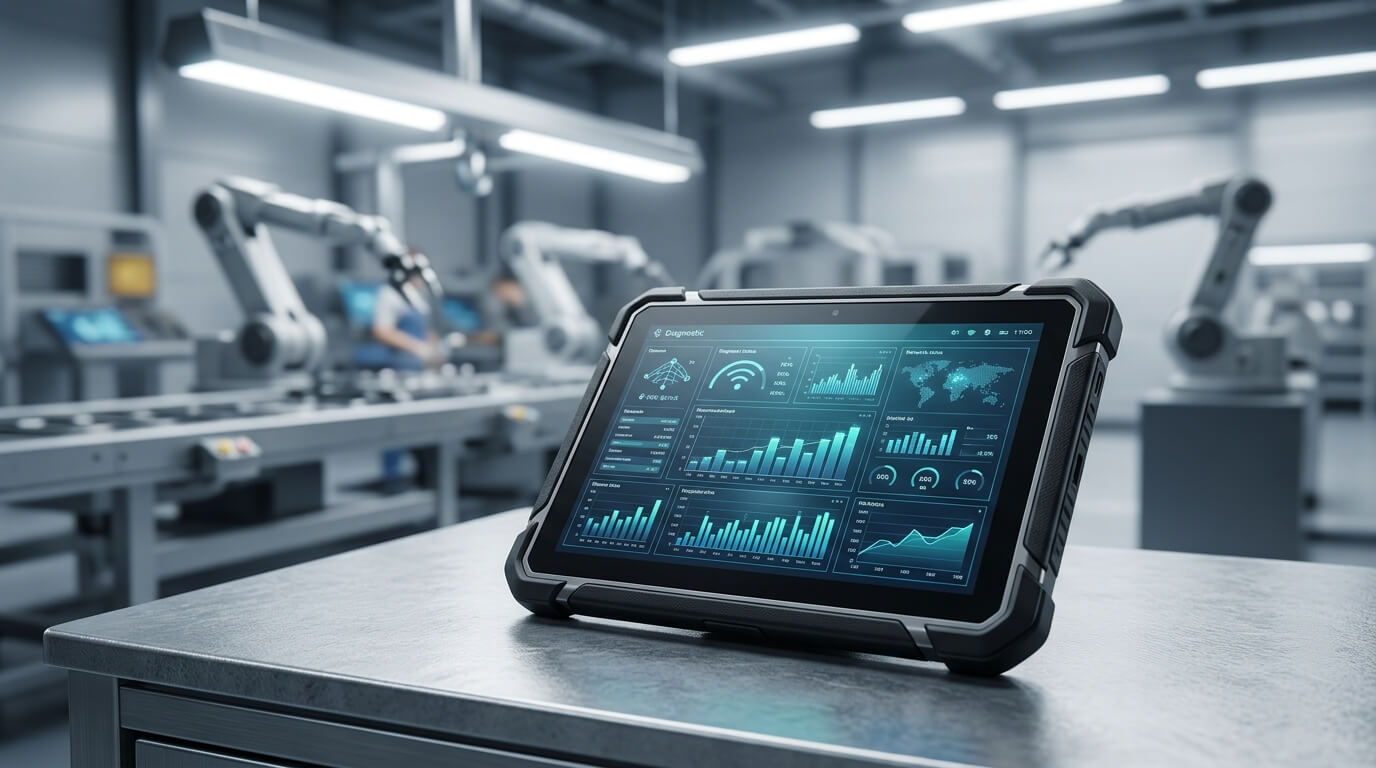
The traditional IT support model is reactive: a device breaks, a worker reports it, and IT tries to fix it or replaces it. Predictive analytics flips this model by utilizing MDM telemetry to spot the early warning signs of hardware failure before the device actually dies. This includes tracking frequent application crashes, sudden memory leaks, repeated network dropouts, or an unusually high number of physical drop events registered by the device's accelerometer.
Why It Matters on the Factory Floor
When a device starts acting up, workers often assume it is completely broken and toss it into a drawer, requesting a brand new replacement. This leads to a massive influx of "No Fault Found" (NFF) returns--devices that are physically fine but suffering from a minor, easily fixable software glitch. By utilizing remote control and predictive analytics, IT can remotely diagnose the device, clear the cache, restart the app, and get the hardware back on the floor without spending a dime on replacement hardware.
The Shareable Stat
"Manufacturers utilizing predictive MDM analytics and remote troubleshooting report a 50% decrease in 'no fault found' hardware returns, keeping functional devices out of the e-waste bin."
The Nomid Advantage
Nomid MDM provides powerful remote control capabilities that allow IT administrators to take over a rugged Android device's screen anywhere in the world. Whether the device is on a forklift in a Texas warehouse or an assembly line in Germany, your IT team can instantly view the screen, pull advanced diagnostic logs, and resolve software conflicts in seconds. This prevents perfectly good hardware from being prematurely retired due to minor software frustrations.
Maximize Your Hardware ROI with Nomid MDM
Extending the lifespan of your rugged Android fleet is no longer an optional cost-saving measure; it is a critical necessity for modern manufacturing operations. As hardware refresh cycles stretch toward the five-year mark, organizations must move beyond reactive IT support and embrace proactive lifecycle management. The key takeaway is clear: software controls dictate hardware longevity.
As an official Android Enterprise Partner, Nomid MDM is uniquely positioned to help you execute these strategies. Our platform is built specifically for the demands of complex industries like Manufacturing, Logistics, Healthcare, and Retail. From lightning-fast Zero-Touch Enrollment to deep Samsung Knox integration, we provide the tools you need to lock down, monitor, and optimize your mobile assets.
Stop letting preventable battery failures and rogue software updates dictate your IT budget. Partner with Nomid MDM to take total control of your rugged Android fleet, extend your hardware lifecycle, and keep your manufacturing operations running at peak efficiency.
Purpose-built for your industry
See how Nomid MDM delivers tailored device management for your specific industry needs.
Start for FreeRelated Articles
View all posts
Why Should Companies Keep Corporate Mobile Devices Updated?
In the modern corporate environment, smartphones are essential tools for communication, productivity, and business management. Learn why keeping them updated is crucial.
How MDM Improves Security and Compliance for Enterprises: A Practical Guide
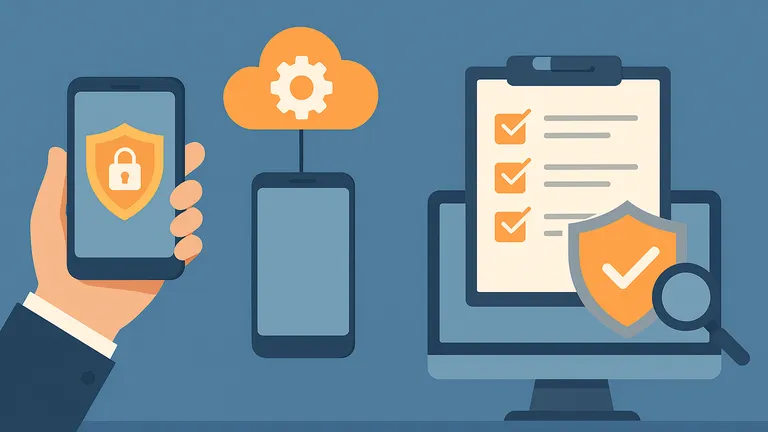
According to a recent report by Kaspersky, there was a 70% increase in attacks against mobile devices in Latin America by 2025, highlighting how threats to corporate smartphones and tablets are on the rise. In this context, protecting corporate data on these devices and ensuring legal compliance is no longer optional – it is a strategic necessity.