Decoding the Android XR Platform: What IT Leaders Need to Know
Explore the new Android XR platform for enterprise. Learn about future device management capabilities, security protocols, and industry use cases to prepare your IT strategy.
The announcement of the Android XR platform by Google, Samsung, and Qualcomm isn't just another consumer tech headline; it's a signal for a major shift in enterprise mobility. For IT leaders, this means the era of scalable, enterprise-grade extended reality is finally here. This guide cuts through the launch hype to provide a practical, technically-grounded analysis for IT professionals. We'll break down what Android XR is, why its open ecosystem matters for your business, and most importantly, how you can prepare to manage and secure these devices within your existing infrastructure. We'll cover the core components of the platform, explore tangible use cases across key industries, and provide an expert forecast on how Android Enterprise management principles will extend to this new frontier of computing.
Decoding the Android XR Platform: What IT Leaders Need to Know
The Core Architecture: More Than Just Android on a Headset
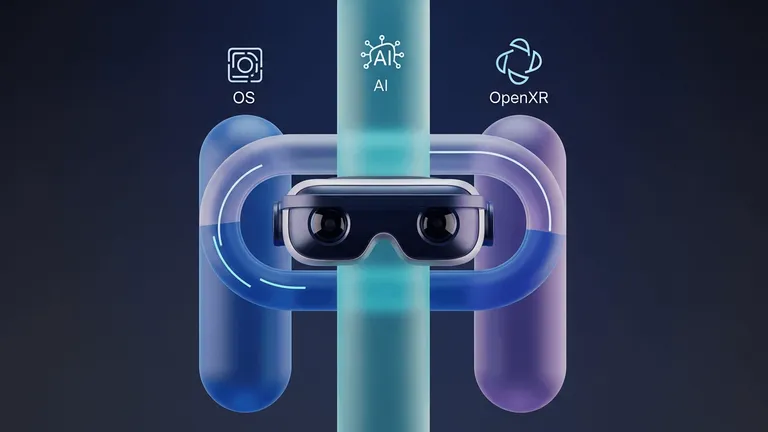
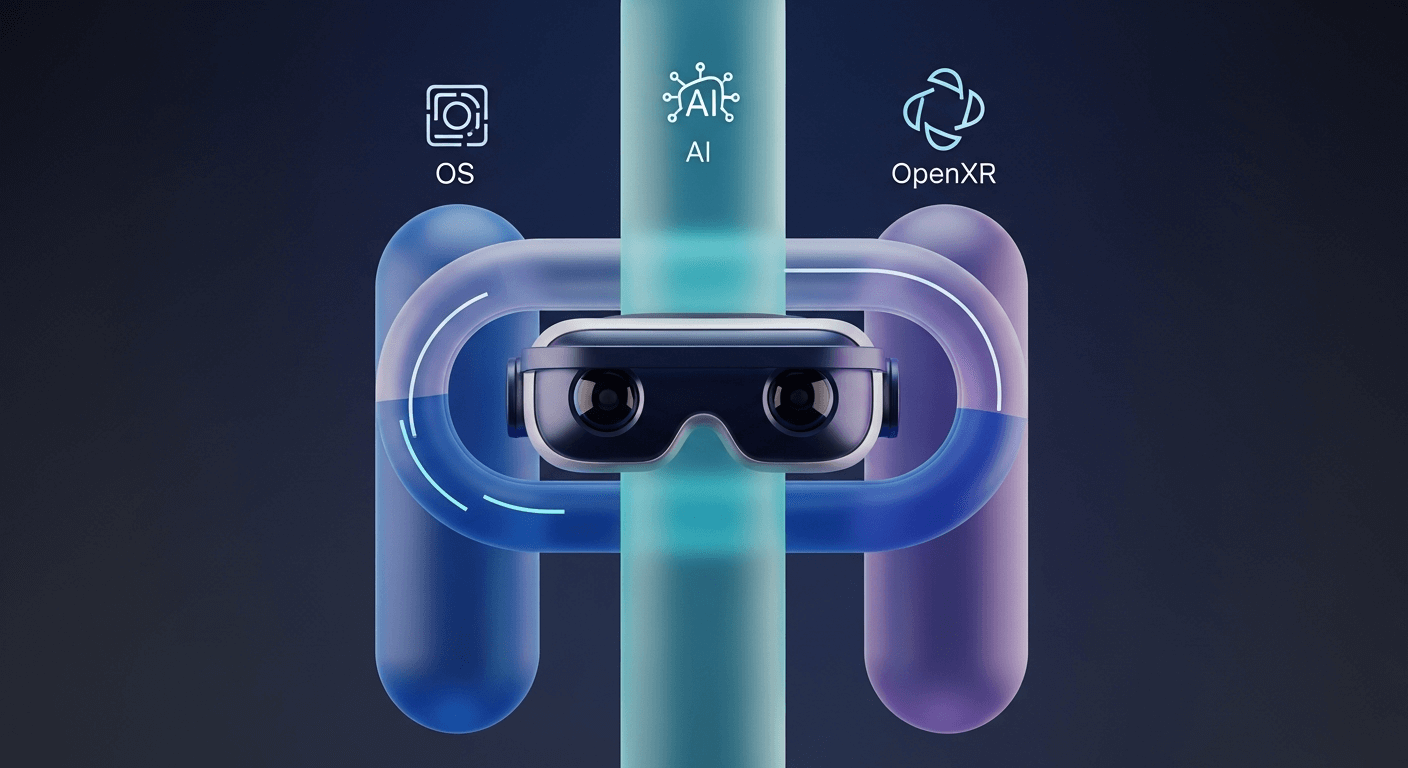
It's crucial to understand that Android XR is not simply the mobile Android OS shoehorned into a headset. It represents a fundamental rebuild of the operating system, engineered from the ground up for the unique demands of spatial computing. Previous attempts at Android-based VR were often fragmented, leading to inconsistent experiences and development hurdles. Android XR addresses this with a unified platform built on three core pillars:
- A Specialized OS Foundation: The platform features a specialized version of Android optimized for the low-latency, high-refresh-rate performance required for a comfortable and immersive XR experience. This includes deep kernel-level optimizations to manage sensor data, graphical rendering, and power consumption efficiently.
- Deep Gemini AI Integration: Android XR is designed for what Google calls the "Gemini era." This means AI is not an afterthought but a core component. Gemini will enable advanced contextual awareness, sophisticated hand-and-object tracking, and natural language interfaces, allowing users to interact with digital content in a more intuitive way.
- Native OpenXR Support: By building on the OpenXR standard, Google ensures that developers can create applications that run across a wide range of hardware without needing to rewrite code for each specific device. For enterprise, this prevents vendor lock-in and fosters a richer, more competitive application ecosystem.
This approach moves beyond siloed experiences to create a coherent, powerful foundation for the next generation of computing devices. Nomid's expertise is built on the core Android framework. Our deep understanding of the Android OS and its security layers provides a critical advantage in preparing for the management extensions that will define Android XR in the enterprise.
"Android XR is the first Android platform built entirely for the Gemini era... building an open, unified platform for the next evolution of computing." - Sameer Samat, President of Android Ecosystem at Google.
The Strategic Alliance: Google, Samsung, and Qualcomm
The partnership behind Android XR is as significant as the technology itself. This isn't a single company's project; it's a strategic alliance of industry giants, each bringing a critical component to the table. This trifecta creates a vertically integrated yet open ecosystem designed for rapid, widespread adoption-a key requirement for any technology to succeed at an enterprise scale.
- Google provides the software foundation with the Android XR operating system and the powerful Gemini AI models that drive its intelligence.
- Samsung, with its "Galaxy XR" hardware (codenamed Project Moohan), brings its world-class manufacturing scale, display technology, and deep expertise in integrating hardware and software into polished consumer and enterprise devices.
- Qualcomm delivers the specialized silicon, the Snapdragon chipsets purpose-built for the performance and power efficiency demands of XR.
For IT decision-makers, this collaboration de-risks adoption. It signals a long-term commitment and ensures a stable supply chain, robust hardware, and a consistent software platform. Our close partnership with Samsung and deep integration with Knox allows us to anticipate how Samsung's enterprise-grade features will manifest in Galaxy XR devices, offering our clients a head start on security and management.
"With Galaxy XR, Samsung is introducing a brand-new ecosystem of mobile devices... allowing XR to move from concept to everyday reality..." - Won-Joon Choi, COO of Mobile eXperience Business at Samsung Electronics.
Mapping Android XR to Enterprise Needs: Use Cases by Industry
The true value of any new platform is measured by its ability to solve real-world business problems. The broader XR market is expected to rocket to a staggering $300 billion by 2024, with enterprise applications being a primary driver. Android XR is poised to accelerate this adoption by providing a scalable and manageable foundation for transformative use cases.
Healthcare & Manufacturing: Precision and Remote Expertise
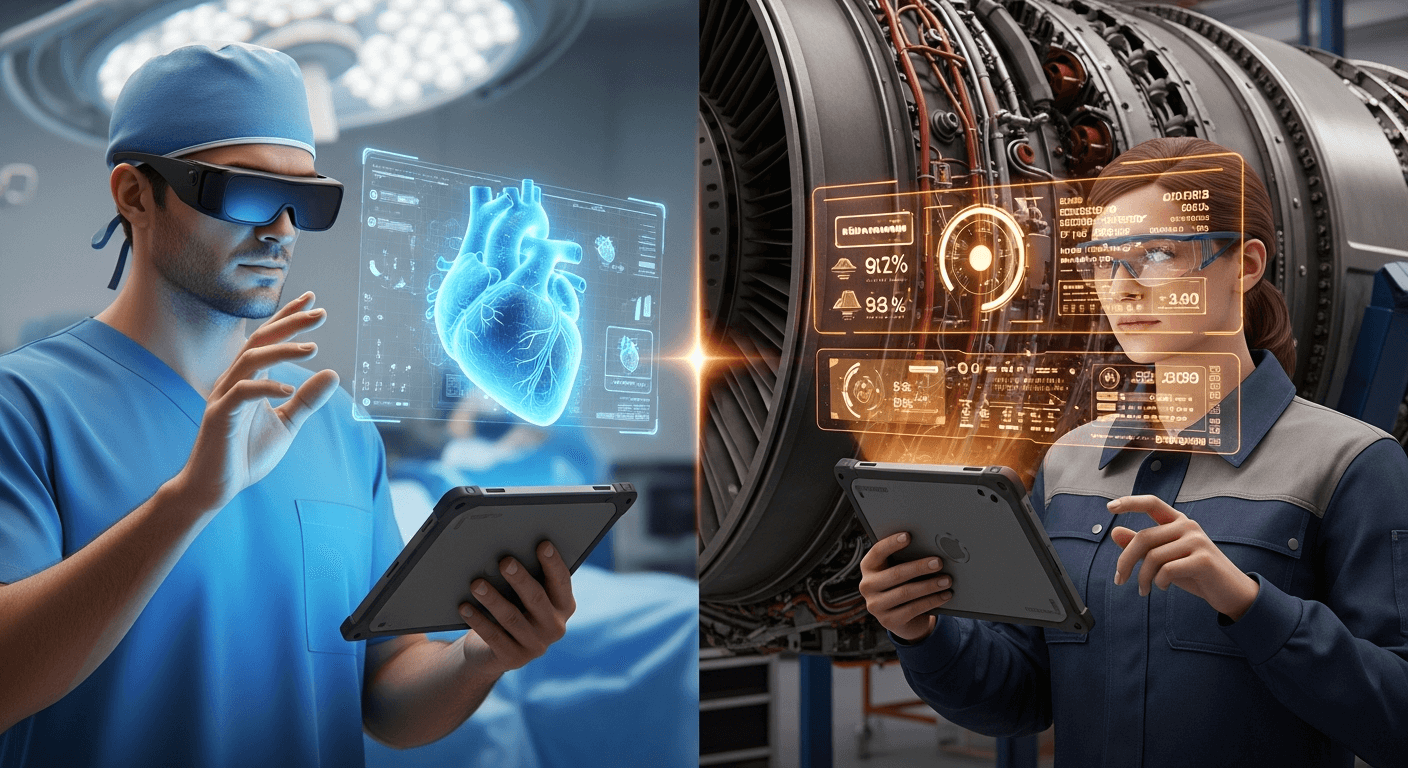
In high-stakes industries like healthcare and manufacturing, precision and access to expertise are paramount. Android XR devices can deliver information and guidance directly into a professional's field of view, unlocking significant improvements in safety, accuracy, and training effectiveness.
| Industry | Use Case | Business Impact (ROI) |
|---|---|---|
| Healthcare | Surgical Training & Planning: Surgeons can practice complex procedures on realistic 3D anatomical models, reducing learning curves and improving patient outcomes. | Reduced training costs, improved surgical precision, and faster onboarding for new surgical techniques. |
| Healthcare | Remote Consultation: A rural physician can consult with a specialist who sees real-time patient vitals and imaging data overlaid in their view. | Expanded access to specialist care, reduced travel time for patients, and faster diagnostic decisions. |
| Manufacturing | Complex Assembly Guidance: Assembly line workers see step-by-step holographic instructions overlaid directly onto the part they are building. | Drastic reduction in assembly errors (up to 90% in some studies), increased production speed, and lower training costs. |
| Manufacturing | Remote Expert Assistance: A field technician can stream their first-person view to a senior engineer who can annotate the live video feed to guide repairs. | Minimized equipment downtime, reduced travel expenses for senior staff, and faster problem resolution. |
Nomid's existing solutions for Healthcare and Logistics are built to handle sensitive data and mission-critical workflows. We're already architecting how these HIPAA and SOC 2 compliant frameworks will apply to securing and managing data on Android XR devices in these high-stakes environments.
Logistics & Retail: Streamlining Operations and Customer Experience
For logistics and retail, efficiency and customer engagement are the names of the game. Android XR offers hands-free workflows and immersive experiences that can redefine how warehouses operate and how customers interact with products.
Key applications include:
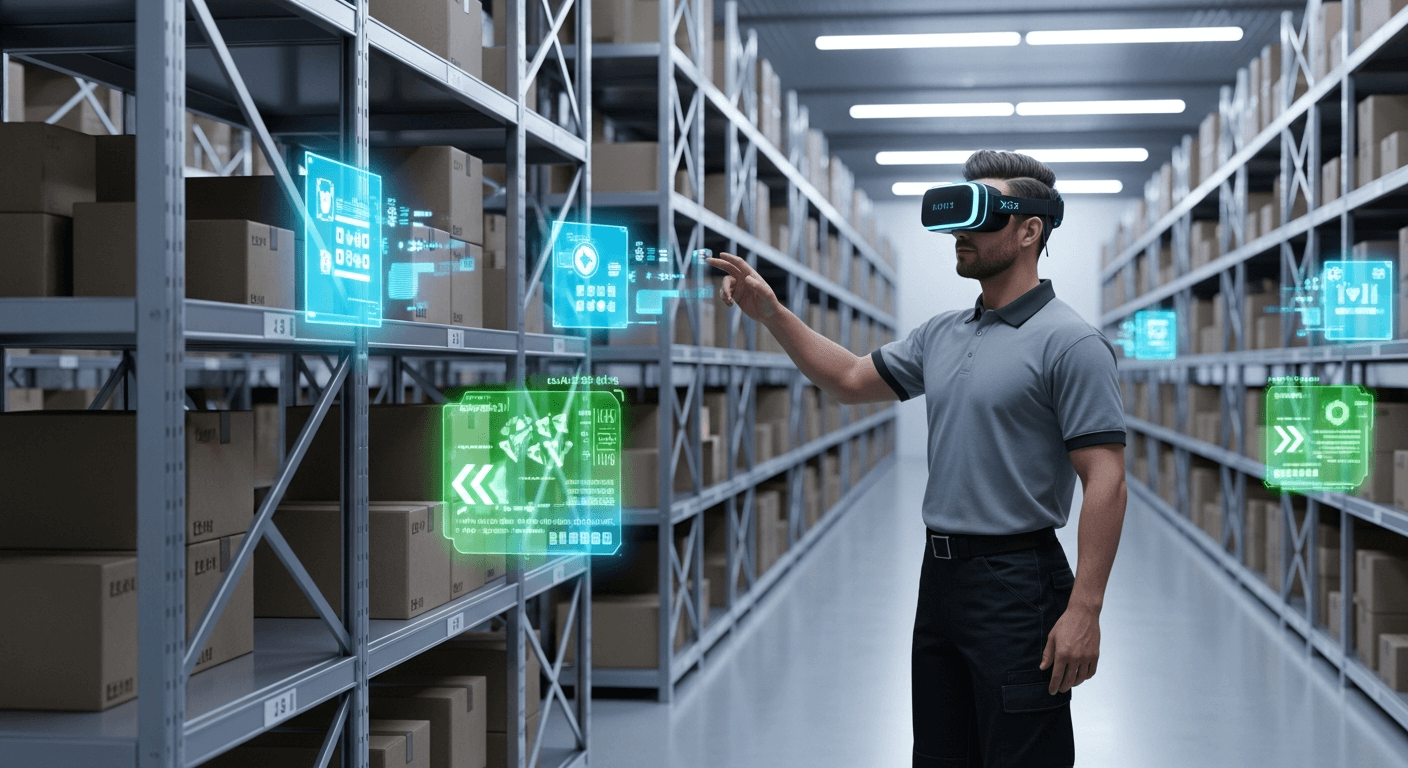
- Logistics - Vision Picking: Warehouse workers receive picking instructions directly in their line of sight. The device's camera can confirm the correct item has been picked via barcode scanning, dramatically increasing pick accuracy and speed over traditional paper or handheld scanner methods.
- Retail - Virtual Showrooms: A customer can use an in-store headset to visualize a new sofa or appliance in a 3D model of their own living room, configured with their chosen fabric and color. This "try before you buy" experience drives higher conversion rates and reduces returns.
- Retail - Associate Training: New employees can be trained on complex product lines or store layouts in an immersive, simulated environment. This allows them to learn and make mistakes in a safe setting before ever interacting with a customer, improving confidence and performance.
- Logistics - Route Optimization: Delivery drivers can see optimized routes and package information overlaid on their view of the real world, reducing delivery times and improving operational efficiency.
These use cases require devices to be locked down, single-purpose tools. Nomid's expertise in Android Kiosk Mode and policy enforcement will be directly transferable, ensuring XR devices are secure, dedicated, and purpose-built for their role in the workflow.
The Future of Fleet Management: Securing and Deploying Android XR
Extending Android Enterprise: A Forecast for XR Device Management
For any technology to be viable in the enterprise, it must be manageable. While Google has not yet released the specific management APIs for Android XR, we can make a highly educated forecast based on the platform's foundation. Management will almost certainly be an extension of the existing, mature Android Enterprise framework. This is excellent news for IT teams, as it means you won't be starting from scratch. The concepts and many of the tools will be familiar.
Here’s what you can likely expect:
- Device Owner Mode: For corporate-owned devices, you will have full control. This is the equivalent of a fully managed device in the mobile world, allowing IT to enforce strict security policies, control all apps, and completely lock down the device for a specific purpose (e.g., a training simulator or a warehouse picking tool).
- Work Profile (Potential for BYOD): While the initial focus will be on corporate-owned devices, it's plausible that a "Work Profile" concept could emerge. This would allow an employee to use a personal XR device for work by creating a secure, managed container for corporate apps and data, keeping it separate from personal information.
- Granular Policy Controls for XR: Expect to see familiar policies adapted for the spatial context. Think beyond just password requirements and app blocklists. You'll likely be able to control permissions for spatial tracking, microphone access, camera usage, and network connectivity to protect sensitive corporate environments.
As an official Android Enterprise Partner, Nomid is in a prime position to implement these management APIs the moment they become available. Our platform is architected to rapidly adopt new Android Enterprise features, ensuring our clients can manage XR devices with the same familiar, intuitive interface they use for their phones and tablets.
Zero-Touch Enrollment: The Key to Scalable XR Deployments
Imagine the logistical nightmare of manually setting up 500 XR headsets for a new warehouse deployment. The unboxing, connecting to Wi-Fi, signing in, downloading apps, and configuring settings for each device would take weeks of IT time. This is where Zero-Touch Enrollment becomes not just a convenience, but a business necessity.
Zero-Touch Enrollment, a cornerstone of modern Android management, will be critical for Android XR. The process transforms deployment into a simple, automated workflow:
- Your organization purchases Android XR devices from an authorized reseller.
- The reseller registers the device serial numbers to your company's Zero-Touch portal.
- You assign a default MDM configuration profile in your Nomid console.
- The device is shipped directly to the end-user or facility.
- The user unboxes it, powers it on, and connects to a network. The device automatically recognizes it belongs to your organization, enrolls itself in Nomid MDM, and downloads all the required policies, apps, and settings without any manual IT intervention.
This process reduces setup time by over 75% per device and eliminates configuration errors. Nomid's industry-leading speed and reliability with Zero-Touch Enrollment for existing Android devices is our core differentiator. We are proactively engineering our infrastructure to handle the unique requirements of XR device enrollment at scale, ensuring our clients can deploy their fleets faster than anyone else.

The Enterprise Landscape: Android XR vs. Walled Gardens
A Strategic Comparison for IT Decision-Makers
When evaluating a new technology platform, it's essential to consider the entire ecosystem, not just the initial hardware. For enterprise IT, factors like flexibility, long-term support, and avoidance of vendor lock-in are critical. Android XR's open approach presents a significant strategic advantage over the "walled garden" ecosystems of competitors.
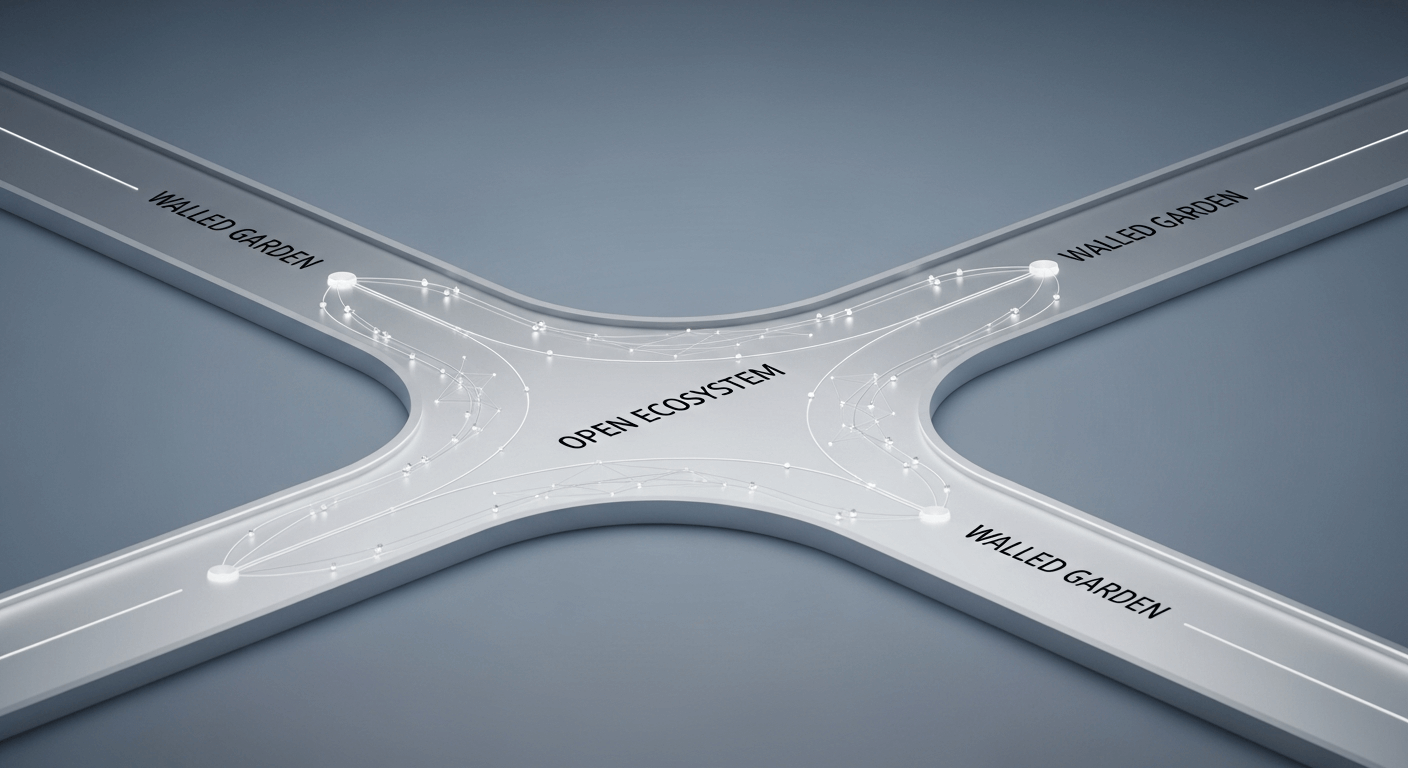
| Factor | Android XR | Apple visionOS | Meta Horizon OS |
|---|---|---|---|
| Ecosystem | Open: Allows multiple hardware manufacturers, fostering competition and innovation. | Closed: Tightly controlled hardware and software from a single vendor. | Semi-Open: OS is being licensed to third parties, but the ecosystem is still centered on Meta's services. |
| Hardware Diversity | High: Expect devices from Samsung, and likely others, at various price points and form factors. | Low: A single, premium hardware offering. | Moderate: Primarily Meta's own Quest line, with future devices from partners like ASUS and Lenovo. |
| Management | Android Enterprise: Leverages a mature, robust, and widely understood MDM framework. | Apple MDM Framework: A mature framework, but limited to Apple's ecosystem. | Proprietary (Quest for Business): A developing enterprise solution, less integrated with unified endpoint management tools. |
| Enterprise Focus | Strong: Built on Android, the dominant enterprise mobile OS, with a clear path for management and security. | Emerging: Primarily a prosumer/developer device with enterprise capabilities being added. | Growing: Quest for Business shows intent, but the platform's roots are in consumer gaming. |
For a CIO or IT Director planning a multi-year strategy, Android XR's open model offers the flexibility to choose the right hardware for the right job and integrates into a familiar management paradigm. Our singular focus on Android means we provide unparalleled depth of expertise. While others offer generic support across all platforms, we live and breathe the Android ecosystem. This specialization ensures our clients can leverage the full power and flexibility of an open platform like Android XR.
Preparing for the Next Wave of Enterprise Mobility
The arrival of a cohesive, enterprise-ready XR platform is a significant milestone. To prepare your organization, it's time to move from observation to action.
Your key takeaways should be:
- It's Real and It's Scalable: Android XR is not a future concept; it's an enterprise-ready platform built on a strategic partnership designed for scale.
- Management is Familiar: Device management will be a natural extension of the Android Enterprise framework you already know, minimizing the learning curve for your IT team.
- Openness is a Strategic Advantage: The open ecosystem of Android XR provides crucial long-term flexibility and avoids the risks of vendor lock-in associated with closed platforms.
- Deployment Hinges on Automation: Scalable deployment will hinge on Zero-Touch Enrollment, making it a critical capability to look for in an MDM partner.
Your next steps should involve beginning internal discussions to identify a pilot use case within your organization. Task your security team with a preliminary risk assessment based on the Android security model. Most importantly, engage with a specialized Android Enterprise partner to stay ahead of management API releases and strategy development.
Nomid MDM is not a generic device manager; we are Android Enterprise specialists. Our platform, expertise, and focus are uniquely aligned to help your organization navigate, deploy, and manage the next generation of Android XR devices seamlessly and securely. We are ready for the future of enterprise mobility.
Written by
David Ponces
Tags
Related Articles
View all posts industry
 5 Strategies to Extend the Lifespan of Rugged Android Devices in Manufacturing
The modern manufacturing floor is an unforgiving environment. Between extreme temperatures, airborne metallic dust, high-impact concrete drops, and continuous multi-shift usage, enterprise mobile devices take an absolute beating. Historically, IT departments relied on a standard three-year hardwa...
 industry
 Shadow AI 2.0: How to Use MDM to Control Local AI Models on Enterprise Devices
We are officially entering the era of Bring Your Own Model (BYOM), and it is rendering traditional network security architectures obsolete. For the past two years, Chief Information Security Officers (CISOs) have been battling "Shadow AI 1.0"—employees pasting proprietary source code or sensitive...