Dlaczego platformy MDM będą głównym celem cyberataków w 2026 roku
Platformy MDM stają się kluczowym celem cyberataków ze względu na ich szerokie uprawnienia w sieciach korporacyjnych. Artykuł omawia rosnące zagrożenia dla systemów zarządzania urządzeniami w 2026 roku.

Przez ostatnią dekadę strategie bezpieczeństwa przedsiębiorstw były obsesyjnie skoncentrowane na punktach końcowych. Dyrektorzy ds. bezpieczeństwa informacji (CISO) i dyrektorzy IT zainwestowali miliony w zabezpieczanie poszczególnych smartfonów, wzmocnionych skanerów kodów kreskowych i tabletów medycznych. Jednak w Nomid dostrzegamy przerażającą zmianę paradygmatu - taką, która sprawia, że tradycyjne modele bezpieczeństwa skoncentrowane na punktach końcowych stają się całkowicie przestarzałe. Pole bitwy się przesunęło. Punkt końcowy nie jest już głównym celem; jest nim płaszczyzna zarządzania.
Niedawny, otrzeźwiający raport branżowy firmy Techstep potwierdza dokładnie to, przed czym ostrzegaliśmy naszych partnerów korporacyjnych: cyberprzestępcy aktywnie przenoszą swój cel z poszczególnych urządzeń bezpośrednio na platformy zarządzania urządzeniami mobilnymi (MDM) i ujednoliconego zarządzania punktami końcowymi (UEM). Po co włamywać się do tabletu pojedynczego kierowcy logistyki, skoro można przejąć centralny układ nerwowy, który kontroluje 50 000 takich urządzeń?
Wierzymy, że do 2026 roku wykorzystanie architektur zarządzania jako broni (weaponization) stanie się decydującym kryzysem cyberbezpieczeństwa dla globalnych przedsiębiorstw. Era traktowania MDM jako zwykłego narzędzia administracyjnego dobiegła końca. Dziś musi być ono chronione jako krytyczna infrastruktura państwowa. W tym artykule eksperckim przeanalizujemy nadchodzącą falę cyberataków na MDM w 2026 roku, którą z pewnością przyniesie przyszłość, ujawnimy krytyczne wady w generycznych zabezpieczeniach infrastruktury UEM i wykażemy, dlaczego wyspecjalizowane zarządzanie systemem Android w przedsiębiorstwie jest jedyną słuszną drogą naprzód.
"Cyberprzestępcy zdali sobie sprawę, że platformy MDM są ostatecznym wytrychem. Nie bronimy już urządzeń; bronimy samej infrastruktury, która nadaje tym urządzeniom uprawnienia do istnienia w sieci."
Nadchodzący kryzys: Wykorzystanie platform MDM jako broni
Aby zrozumieć krajobraz zagrożeń w 2026 roku, należy zrozumieć zwrot z inwestycji (ROI) nowoczesnej cyberprzestępczości. Napastnicy działają z bezwzględną wydajnością. Phishing wymierzony w jednego pracownika w celu uzyskania dostępu do jednego urządzenia przynosi niski zwrot z inwestycji. Jednak pomyślne przeprowadzenie ataku na platformę MDM/UEM organizacji daje atakującemu absolutną władzę nad całą flotą. Na tym właśnie polega wykorzystanie platformy MDM jako broni.
Gdy generyczny system UEM zostanie przejęty, atakujący staje się w zasadzie administratorem IT. Może po cichu przesyłać złośliwe ładunki zamaskowane jako legalne aktualizacje aplikacji firmowych. Może wyłączyć szyfrowanie na urządzeniu, wykradać poświadczenia, omijać mechanizmy kontroli dostępu warunkowego i czyścić urządzenia w celu zniszczenia dowodów kryminalistycznych. Co gorsza, może wykorzystać zaufany status MDM, aby przejść bezpośrednio do rdzenia sieci korporacyjnej, całkowicie omijając zapory ogniowe oraz agentów wykrywania i reagowania w punktach końcowych (EDR).
W Nomid przewidujemy, że do 2027 roku ponad 60% katastrofalnych naruszeń mobilności w przedsiębiorstwach nie będzie wynikać z błędu użytkownika, ale z luk w samej infrastrukturze zarządzania. Generyczne systemy UEM - platformy zbudowane jako „wszechstronne narzędzia” dla systemów iOS, Windows, macOS i Android - są z natury podatne na zagrożenia. Ich ogromne, przeładowane bazy kodów stanowią nieskończenie szeroką powierzchnię ataku. Próbując zarządzać każdym systemem operacyjnym na świecie z poziomu jednego panelu, nieuchronnie idzie się na kompromis w zakresie głębokich integracji zabezpieczeń na poziomie systemu operacyjnego, wymaganych do zapewnienia bezpieczeństwa dedykowanym flotom.

Wyścig zbrojeń AI i obciążenie w postaci przestarzałych systemów Android
Sytuację związaną z wykorzystaniem platform MDM jako broni komplikuje gwałtowny rozwój sztucznej inteligencji. Wkraczamy w erę hiper-zautomatyzowanej cyberwojny napędzanej przez AI. Napastnicy wykorzystują duże modele językowe i uczenie maszynowe do automatyzacji wykrywania luk w zabezpieczeniach, generowania polimorficznego złośliwego oprogramowania omijającego wykrywanie oparte na sygnaturach oraz przeprowadzania wysoce wyrafinowanych ataków socjotechnicznych na administratorów IT w celu kradzieży poświadczeń MDM.
Te zagrożenia bezpieczeństwa mobilnego oparte na AI wymagają równie wyrafinowanej postawy obronnej opartej na sztucznej inteligencji. Nowoczesna obrona przed zagrożeniami wymaga ciągłej analizy behawioralnej w czasie rzeczywistym na samym urządzeniu, napędzanej przez zaawansowane algorytmy uczenia maszynowego. I tutaj tysiące przedsiębiorstw wpada w pułapkę.
Raport Techstep trafnie podkreśla krytyczną podatność, o której my w Nomid mówimy głośno: tykającą bombę zegarową w postaci przestarzałych flot urządzeń z systemem Android. Nie można uruchamiać zadań bezpieczeństwa opartych na AI z 2026 roku na sprzęcie z 2019 roku. Podatności starszych systemów Android nie dotyczą już tylko niezałatanych błędów oprogramowania; dotyczą one głębokich deficytów mocy obliczeniowej. Starszym urządzeniom brakuje jednostek przetwarzania neuronowego (NPU) i sprzętowych enklaw bezpieczeństwa wymaganych do przeprowadzania ciągowej atestacji kryptograficznej i analizy zagrożeń w czasie rzeczywistym.
"Przestarzałe urządzenie w 2026 roku to nie tylko niemodny sprzęt; to martwy punkt w sieci, w którym zagrożenia napędzane przez AI mogą się rozwijać niewykryte przez system MDM."
Gdy przedsiębiorstwo próbuje zarządzać flotą przestarzałych urządzeń o niskiej mocy za pomocą generycznego systemu UEM, tworzy idealne warunki dla napastników. UEM zakłada, że urządzenia są bezpieczne, ponieważ są „zgodne” z podstawowymi zasadami, ale same urządzenia są fizycznie niezdolne do wykrywania nowoczesnych zagrożeń typu zero-day generowanych przez AI. Ten martwy punkt jest dokładnie tym, co cyberprzestępcy wykorzystają, aby przejść z punktu końcowego z powrotem do płaszczyzny zarządzania.

Zabezpieczanie kluczy do królestwa: Przewaga Nomid
Jeśli generyczne systemy UEM są obciążeniem, a przestarzałe urządzenia martwym punktem, jakie jest rozwiązanie? W Nomid wierzymy, że antidotum na kompromitację całej floty jest bezwzględna, bezkompromisowa specjalizacja. Nie chroni się kluczy do królestwa za pomocą generycznego zamka pasującego do wszystkiego. Chroni się je za pomocą architektury zbudowanej specjalnie dla ekosystemu, którym zarządza.
Jako oficjalny partner Android Enterprise, Nomid MDM nie marnuje cykli inżynieryjnych na próby bycia wszystkim dla wszystkich. Jesteśmy skoncentrowani na dostarczaniu najbezpieczniejszego, błyskawicznego i odpornego rozwiązania do zarządzania systemem Android w przedsiębiorstwie na rynku. Dostosowując naszą platformę bezpośrednio do podstawowej architektury Google, eliminujemy przeładowane warstwy oprogramowania pośredniego i translacji API, które nękają generyczne systemy UEM - warstwy, które napastnicy często wykorzystują.
Głęboka integracja zamiast szerokiej generalizacji
Nasze podejście do bezpieczeństwa infrastruktury UEM jest zasadniczo inne. Zamiast polegać na powierzchownych interfejsach API do zarządzania, Nomid MDM integruje się głęboko z jądrem systemu Android i sprzętowymi magazynami kluczy. Oznacza to, że nasze polecenia zarządzania są weryfikowane kryptograficznie na poziomie krzemu.
Nigdzie nie jest to bardziej widoczne niż w naszej natywnej integracji z Samsung Knox. Dla przedsiębiorstw działających w środowiskach o wysokiej stawce, Samsung Knox zapewnia bezpieczeństwo klasy obronnej od poziomu procesora wzwyż. Generyczne systemy UEM często traktują Knox jako dodatek, wykorzystując jedynie ułamek jego możliwości. W Nomid postrzegamy Knox jako fundament. Nasza platforma wykorzystuje Knox Vault do izolowania kodów PIN, haseł i danych biometrycznych od reszty urządzenia, zapewniając, że nawet jeśli system operacyjny zostanie całkowicie przejęty przez atak zero-day napędzany przez AI, poświadczenia zarządzania i dane korporacyjne pozostaną kryptograficznie zabezpieczone.
Zero-Touch Enrollment: Tworzenie nienaruszalnego łańcucha zaufania
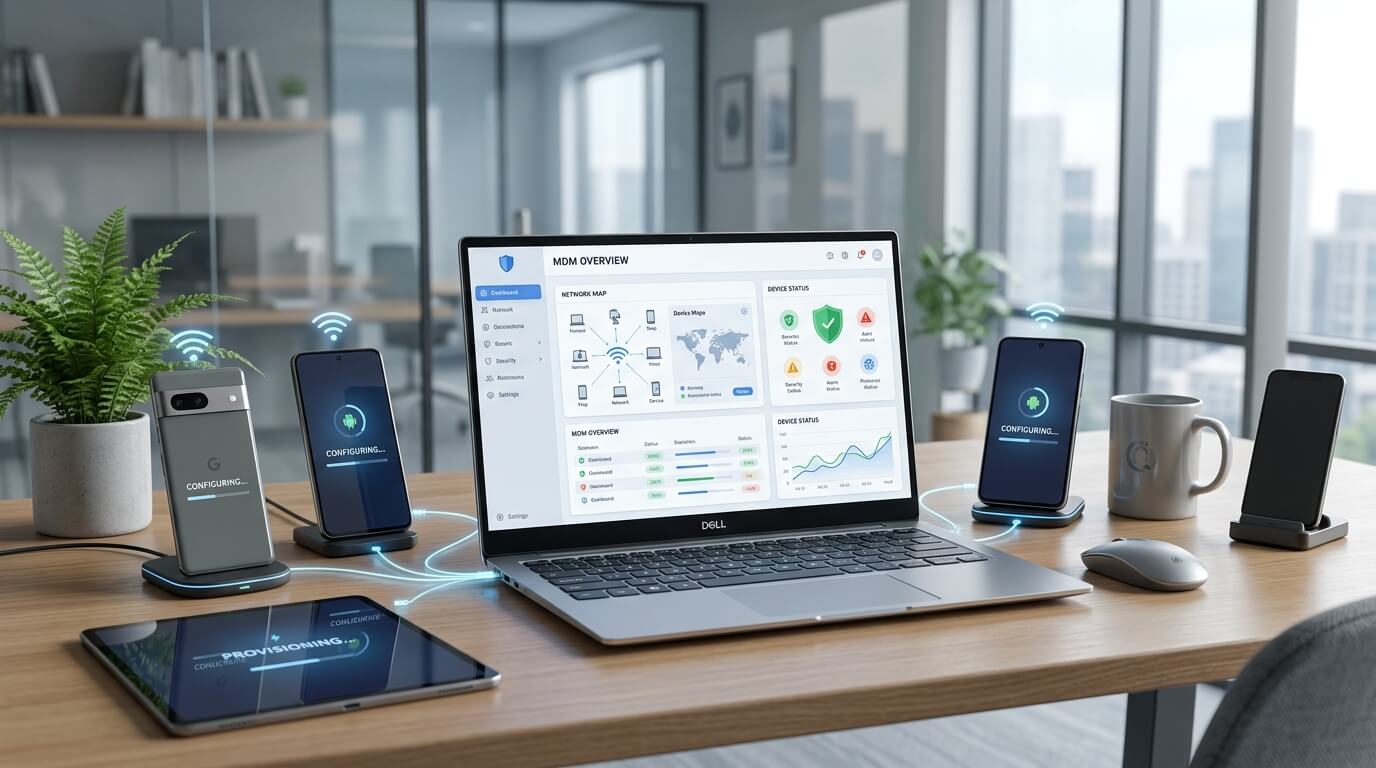
Jednym z najbardziej krytycznych wektorów cyberataków na MDM w 2026 roku będzie łańcuch dostaw i faza wdrażania. Napastnicy coraz częściej próbują przechwytywać urządzenia, zanim dotrą one do użytkownika końcowego, instalując złośliwe profile MDM, aby przejąć urządzenie w momencie jego połączenia z siecią.
Postrzegamy Zero-Touch Enrollment nie tylko jako narzędzie zwiększające wydajność operacyjną, ale jako obowiązkowy mechanizm kontroli bezpieczeństwa. Błyskawiczne wdrożenie Zero-Touch w Nomid MDM ustanawia nienaruszalny łańcuch zaufania od producenta sprzętu (OEM) bezpośrednio do naszej płaszczyzny zarządzania. Gdy urządzenie zostaje rozpakowane i włączone, kryptograficznie weryfikuje swoją tożsamość w Google i zostaje natychmiastowo, wymuszenie zablokowane w środowisku Nomid MDM.
Nie ma miejsca na błąd użytkownika. Nie ma okna czasowego, w którym napastnik mógłby wstrzyknąć fałszywy profil konfiguracyjny. Urządzenie jest albo zarządzane przez Nomid, albo staje się bezużyteczne. Ten poziom bezpieczeństwa łańcucha dostaw nie podlega negocjacjom w branżach, które obsługujemy.
"Zero-Touch Enrollment nie jest już udogodnieniem dla działu IT; to kryptograficzny nakaz. Jeśli proces wdrażania wymaga ręcznej interwencji, już teraz dajesz napastnikom szansę."
Odporność specyficzna dla branży: Obrona linii frontu
Teoretyczne ryzyko wykorzystania MDM jako broni staje się brutalnie realne w przypadku branż krytycznych. Przejęta płaszczyzna zarządzania to nie tylko naruszenie danych; to paraliż operacyjny, zagrożenie dla bezpieczeństwa fizycznego i katastrofalne straty finansowe. W Nomid nasze wyspecjalizowane zarządzanie systemem Android zostało zaprojektowane tak, aby chronić specyficzne procesy robocze w tych sektorach o wysokiej stawce.
- Opieka zdrowotna: Mobilność kliniczna to kwestia życia lub śmierci. Przejęty generyczny system UEM mógłby pozwolić napastnikom na przesłanie oprogramowania ransomware do tysięcy tabletów pielęgniarskich jednocześnie, odcinając zespoły medyczne od telemetrii pacjentów. Nomid MDM wykorzystuje ścisłe piaskownice aplikacji Android Enterprise i ochronę jądra Samsung Knox w czasie rzeczywistym, aby zapewnić izolację danych elektronicznej dokumentacji medycznej (EHR) i sprawne działanie urządzeń nawet podczas aktywnego ataku sieciowego.
- Logistyka i łańcuch dostaw: W logistyce wzmocnione urządzenia z systemem Android są sercem operacji. Cyberprzestępcy celujący w łańcuch dostaw będą próbować wykorzystać luki w starszych systemach Android do fałszowania danych GPS lub przechwytywania tras przejazdów za pośrednictwem MDM. Agresywne wycofywanie przez Nomid przestarzałych wersji systemu operacyjnego i wymuszanie nowoczesnej, sprzętowej atestacji gwarantuje, że każdy skaner kodów kreskowych i urządzenie ELD (Electronic Logging Device) we flocie jest weryfikowane kryptograficznie przed dopuszczeniem do transmisji danych.
- Handel detaliczny: Nowoczesny handel opiera się na mobilnych punktach sprzedaży (mPOS) z systemem Android i skanerach magazynowych. Atak na MDM mógłby zmienić te urządzenia w czytniki kart kredytowych w całej flocie. Nomid MDM wykorzystuje dedykowane tryby urządzeń (tryb kiosku) zablokowane na poziomie systemu operacyjnego, zapewniając, że nawet jeśli napastnik uzyska częściowy dostęp do sieci, fizyczne urządzenie nie może zostać zmienione ani zmuszone do uruchomienia niezatwierdzonych, złośliwych aplikacji.
Mandat wykonawczy na rok 2026
Ostrzeżenie od Techstep jest jasne, a dane są niepodważalne: era „wystarczająco dobrego” zarządzania urządzeniami mobilnymi dobiegła końca. Patrząc w stronę 2026 roku, kadra zarządzająca musi zasadniczo zweryfikować swoje architektury mobilne. Trzymanie się generycznych systemów UEM, które oferują szeroką kompatybilność kosztem głębokiego bezpieczeństwa, jest niedopełnieniem obowiązków. Pozwalanie, aby przestarzałe urządzenia z systemem Android pozostawały w sieci, jest otwartym zaproszeniem dla przeciwników napędzanych przez AI.
W Nomid wierzymy, że jedynym sposobem na zabezpieczenie przyszłości mobilności w przedsiębiorstwie jest traktowanie platformy zarządzania jako najważniejszej posiadanej infrastruktury. Wymaga to platformy, która nie tylko zarządza urządzeniami, ale kryptograficznie wiąże je z bezpiecznym, wyspecjalizowanym ekosystemem.
Czas przestać bronić punktów końcowych i zacząć zabezpieczać klucze do królestwa. Współpracując z oficjalnym partnerem Android Enterprise, takim jak Nomid MDM, wykorzystując integracje klasy obronnej, takie jak Samsung Knox, i wymuszając nienaruszalne wdrożenie poprzez Zero-Touch Enrollment, przedsiębiorstwa mogą przekształcić swoją infrastrukturę mobilną z głównego celu w twierdzę nie do zdobycia.
Napastnicy ulepszają swój arsenał. Czas ulepszyć Twoją architekturę.
Purpose-built for your industry
See how Nomid MDM delivers tailored device management for your specific industry needs.
Start for FreeAutor:
David Ponces
Tagi
Powiązane artykuły
Zobacz wszystkie posty industry
 5 strategii przedłużenia żywotności wytrzymałych urządzeń z systemem Android w produkcji
Poznaj pięć skutecznych strategii pozwalających na wydłużenie okresu eksploatacji wzmocnionych urządzeń z systemem Android w środowisku produkcyjnym. Dowiedz się, jak optymalizacja sprzętu i oprogramowania może obniżyć koszty operacyjne i zwiększyć wydajność.
 industry
 Shadow AI 2.0: Jak wykorzystać MDM do kontrolowania lokalnych modeli AI na urządzeniach korporacyjnych
Dowiedz się, jak rozwiązania MDM pozwalają firmom odzyskać kontrolę nad lokalnymi modelami sztucznej inteligencji i zapobiegać zagrożeniom typu Shadow AI 2.0. Artykuł opisuje skuteczne strategie zarządzania modelami AI na urządzeniach końcowych.